We are developing the social individualist meta-context for the future. From the very serious to the extremely frivolous... lets see what is on the mind of the Samizdata people.
Samizdata, derived from Samizdat /n. - a system of clandestine publication of banned literature in the USSR [Russ.,= self-publishing house]
Much has been written about what underpins the current war in Ukraine; how Russian revanchism is driven by Russkiy Mir ideology, the concept of the ‘Russian World’. This means all parts of what was the Russian Empire must once again be ruled from Moscow (the ‘New Rome’) for Russia to be spiritually and politically whole. It is very much like Nazi notions of “Germany is anywhere there are Germans” with a bit of lebensraum theory thrown in as well.
What makes the Russkiy Mir concept a bit more ‘inclusive’ than the Nazi version of Herrenvolk versus Untermensch, is the insistence that Russia also includes people who are said to be Russified, such as Chechens, Georgians, Moldavians, Buryats, Yakuts etc. etc…and of course all Ukrainians. If you read RIA Novosti (aimed at Russians) rather than Russia Today (aimed at foreign useful idiots), these are the official state narratives proffered day after day.
And the notion that is driving or at least justifying Russian aggression is true.
But there is another way to see this, not so much an alternative but rather a very complimentary perspective. Even if “Russkiy Mir” as both context and meta-context internally justifies Russian actions to Russians, is this the real driver pushing Putin and his supporters at the highest levels of Russia’s establishment? The push certainly isn’t “Ukraine trying to join NATO” (which Germany made clear it would always veto), the “Nazi government in Kyiv” hilarity or assorted biolab absurdities, but rather the ‘Tony Soprano’ theory of Russian geopolitics (Tony Soprano being a fictional mafia boss from the American TV show The Sopranos).
I have seen many people suggest forms of this but Matt Steinglass provides one version that is useful and succinct even if I think it is not entirely right:
In the Sopranos analogy, a business, let’s say a chain of groceries, at the edge of his territory decided they were going to stop paying protection and start trusting the police.
Tony Soprano obviously cannot tolerate this. It’s not just the loss of revenue: it’s that letting it go unpunished tells everybody else who’s paying him protection money that they can leave, too. So Tony decides to hit the groceries, take out the owner and ensure a more pliable one is installed, to send a message to anybody else who might get ideas.
Unfortunately it turns out the grocery clerks are packing shotguns and Tony’s soldiers, who were overconfident, get shot up and retreat. Now Tony has worse problems: he’s lost the grocery chain and he looks weak. Yet he may have inflicted enough damage that his other businesses hesitate to leave; who needs the trouble? Similarly, Ukraine’s economy has shrunk by a third.
Anyway, the point is that if you think about Russia’s invasion of Ukraine as an old-fashioned attempt at territorial conquest, it makes no sense. States don’t gain power by conquering territory anymore, this isn’t the 18th or 19th century. But if you think of it as a mob hit to intimidate states from exiting the protection racket that delivers corrupt rent streams to Russia’s ruling kleptocrats, then it at least made sense–until Ukraine fought back.
It is demonstrably untrue that aspirations for territorial conquest are a thing of the past (see China often stated threats towards Taiwan), but Steinglass’ analogy stands nevertheless. Certainly Ukrainians who understand Russia far better than most Russians understand Ukraine have been making this kind of ‘gangster’ analogy for quite some time. However, too many people in the West have been mesmerised by Russia Today narratives and ingrained Americocentric delusions to look at this from a more local perspective.
Dear Noah, thank you for your last contribution to this discussion. I particularly appreciate the title of your last piece given how neatly it maps onto a similar phrase about how “Real Communism hasn’t been tried”.
The thrust of your position, which is shared by a surprising number of people I respect and hold in high regard in Western heterodox circles, is that “if we could negotiate with Putin, wouldn’t that be better than war?” And I agree: if we could negotiate with Putin, that would be better than than war. But I’m afraid it brings to mind a rather “transphobic” saying we have in Russia:
“If grandma had balls, she’d be grandpa.”
Forgive me, but I’m afraid you’ve forgotten who we are talking about.
In 2008, shortly after Russia’s invasion of South Ossetia, Vladimir Putin explained that “Crimea is Ukrainian. It is not disputed territory. Russia has long recognised and accepted the borders of today’s Ukraine”. When pushed, he further explained that [the suggestion that Russia would invade Crimea] “reeks of provocation”.
Three months before the annexation of Crimea, in December 2013, Vladimir Putin told journalists that the idea of Russia sending troops into any part of Ukraine, including Crimea, was “complete nonsense that cannot and will not happen”.
– Konstantin Kisin observing that anyone arguing for good faith negotiations with Putin is in the grips of delusional wishful thinking.
More recently, Western experts have talked back military reforms, stating that they have been less successful than previously claimed. As the war in Ukraine has shown, reforms have had limited if any influence on Russian military’s operational effectiveness. In many ways, the Russian army still resembles the former Soviet army in its mentality, hierarchical structure, poor quality officers, poor levels of training, ill-discipline, poor logistics, and corruption.
The war in Ukraine pits a vertically structured Russia with a subject population against a horizontally structured Ukraine composed of citizens. During Vladimir Putin’s 22 years ruling Russia as president and prime minister he has re-Sovietized the country, fanned militarism, promoted a quasi-religious cult of the Great Patriotic War and Joseph Stalin, and destroyed civil society and volunteer groups. In Ukraine the opposite has taken place in each of these areas. Ukraine has undergone de-Sovietization since the late 1980s and decommunization since the 2013-2014 Euromaidan Revolution, has denigrated Stalin as a tyrant, switched from military celebration of the Great Patriotic War to commemoration of World War II, and built a dynamic civil society and volunteer movement. Ukrainians have organized three popular revolutions since 1990 to demand their rights; Russia’s last revolution was over a hundred years ago.
[…]
Another important factor has been the widespread view of the Ukrainian state as weak and badly divided between a ‘pro-Russian’ eastern and ‘pro-Western’ western Ukraine. In the last three decades the greatest number of articles published in the media and by think tanks and academics on Ukraine has been on regional divisions and the country split between a pro-Russian east and nationalist, pro-Western west. In Moscow and among Western experts, Ukraine’s Russian speakers were deemed to be inherently unreliable and likely to swing to supporting Russia if Moscow invaded the country.
A shock-and-awe style Russian invasion of Ukraine would exert tremendous pressure on Ukraine’s regional divisions, leading to the state’s fragmentation and the collapse of the Ukrainian army (as in Afghanistan). This did not take place and the reason why it did not was because Ukraine was never a regionally fractured country; its Russian speakers were Ukrainian patriots, and there was never any possibility the Ukrainian army was going to disintegrate in the same manner as the Afghan army.
You say the third-best time to negotiate would be now. I can see why you would want that, but you’re not a party to the negotiations. Russia and Ukraine are. And why would Ukraine negotiate now?
As I said from the outset, what Ukraine needs is long term security. Not words on a piece of paper. Actual security. If they don’t get it, the lives they “save” now will be lost double when Russia inevitably invades again. And, yes, I’m sorry, long term security for Ukraine means NATO membership which Putin would not agree to as things stand.
I don’t want to take anything away from the Ukrainians, who have basically been a banner case of military transformation, but it also helps that the Russians are really, really bad at the whole “war that involves more than bombing hospitals” thing.
The alternative to the cornering and humiliation of Russia would be for the United States and its allies to halt or reduce their aid to Ukraine and impose a stalemate. But that would mean delivering a victory to Russia, because it would still hold more Ukrainian territory than it did in 2014 and would have gone unpunished for pervasive war crimes, including mass murder. In three or four years, a rearmed Russia, thirsting for revenge for the losses and defeats it has suffered, would do the same thing again, and against a dispirited Ukraine. If that were to happen, it would be an utter disaster for American policy and Western security. Such an imposed stalemate would be profoundly immoral, but equally to the point, it would be profoundly stupid.
So this is indeed a dangerous moment, because Putin will inevitably find himself humiliated and cornered and may very well look for a way to lash out. But as General James Wolfe said before storming the heights of Quebec in 1759, war is an option of difficulties. The error lies in thinking that one can titrate the application of violence to achieve exquisitely precise results. To the extent that the West continues to attempt to do so, it will merely ensure more mass graves like those of Bucha and Izyum, and more soldiers lying limbless or in the burn wards of Ukrainian military hospitals. So now, as ever, Churchill’s observation that courage is the virtue that makes all others possible holds, particularly for the leaders of the embattled West. Zelensky could not put it better himself.
“German Galushchenko, the minister of energy, told the YES conference that Ukraine could potentially supply two gigawatts of power to the EU right now, but was being prevented from doing so by bureaucratic obstacles on the European side”
I have written here about the #GamerGate phenomenon before, which was a series of rolling online flash mobs, events and activist commentary mostly doing its thing circa 2014-16. This was kicked off by something specific but quickly evolved into a far wider reaching grassroots pushback against rampant corruption, collusion and ever more woke politicisation in games ‘journalism’ and indeed games themselves.
Naturally the gaming press harrumphed with indignation, howling that GamerGater was an unconscionable harassment campaign; its largely nameless supporters all racist/sexist/homophobic. And much to their shock it didn’t work. GamerGaters ridiculed their evolving official narratives. And to the PR wonks working for MSM publications and their assorted vassals, none of it made any sense, which is why they still make sure the preposterous Wikipedia entry conforms to the official narratives (i.e. very little relation to reality). Too bad guys, you can’t bomb a hashtag.
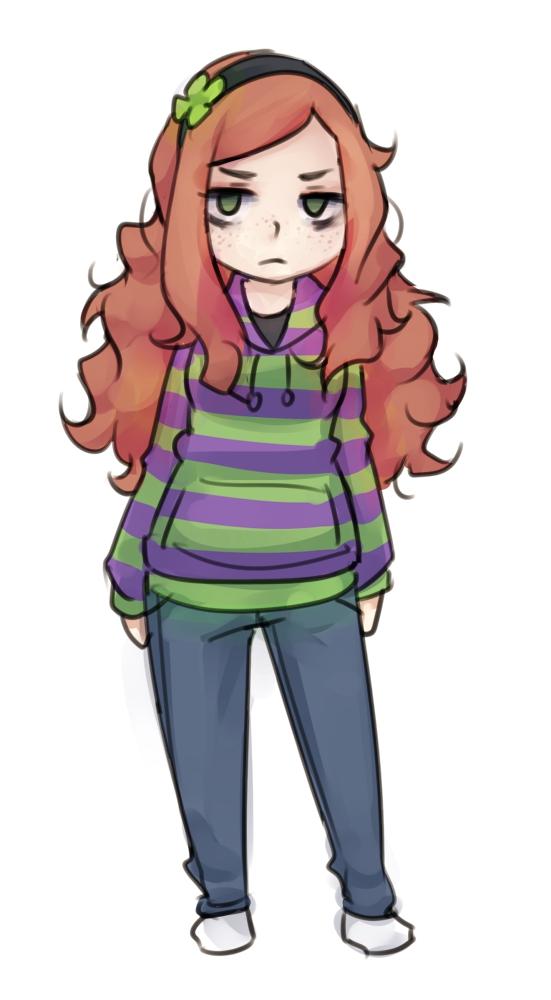
GamerGate was something that drove (and still drives) many people insane, living rent free in their heads for years. Even now, the mere sight of GamerGate mascot Vivian James (video games, geddit?) can cause hilarity and rage in certain people.
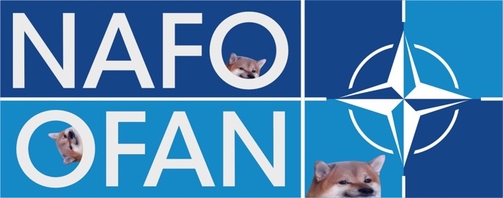
Fast forward to 2022 and behold #NAFO: the North Atlantic Fellas Organisation.
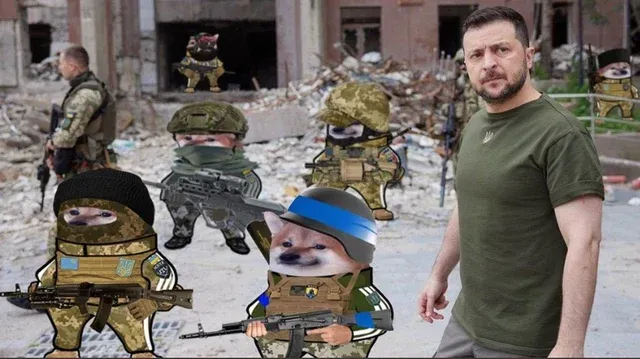
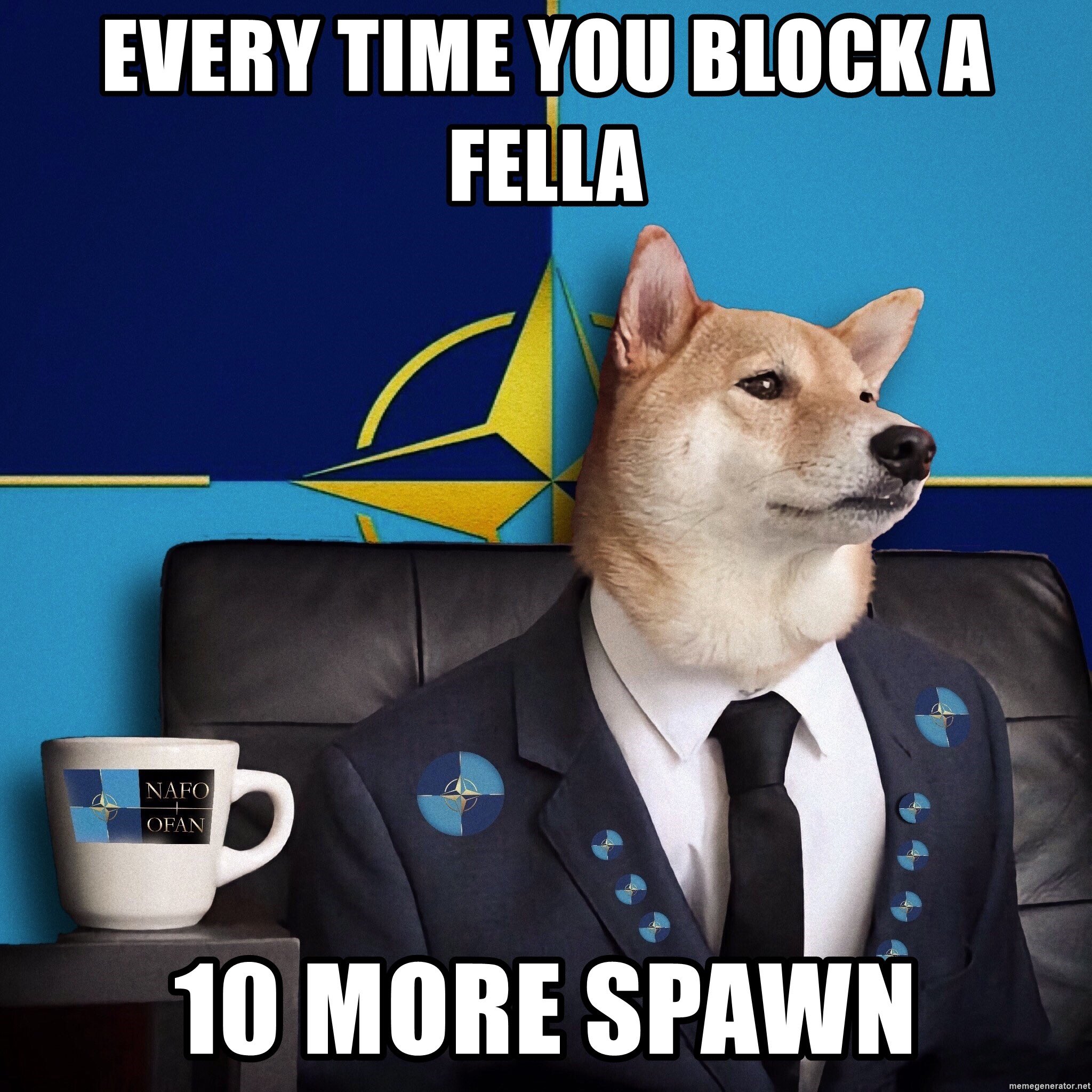
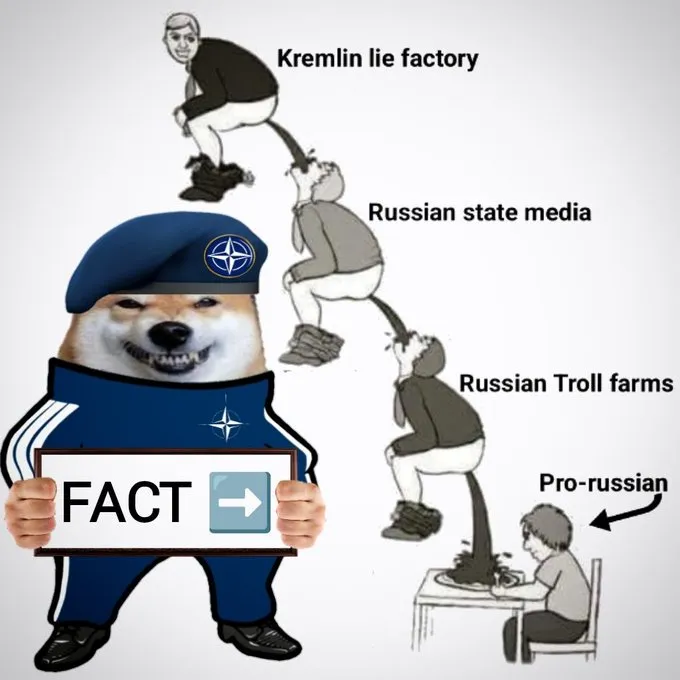
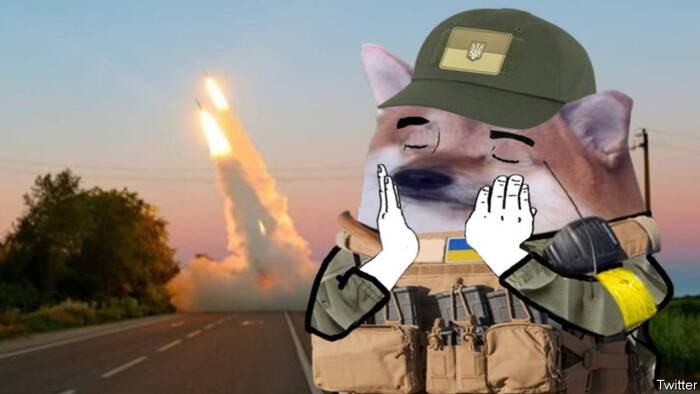
And who are ‘the fellas’? A large and growing online pack of attack dogs countering, dare I say smothering, official Russian troll factory output, as well as other pro-Kremlin talking heads online. And their mascots are daft cartoon dogs (variations of a Shiba Inu to be precise). If journalistic collusion was a constant target of #GamerGate, the Russian troll farms are the modern analogy to that, constantly targeted and smothered by NAFO posting either pro-Ukrainian counter-narratives or just ridiculing or flagging up pro-Russian ones.
Many people, particularly those operating within institutions, don’t understand #NAFO for same reason PR departments of various video games companies & press outlets didn’t (and still don’t) understand #GamerGate.
Is #NAFO engaged in ‘information warfare‘? Absolutely. They even get a shout out from the Ukrainian Ministry of Defence. But they are not managed out of an office in Langley, Virginia nor by some adjunct of the Ukrainian intelligence services. #NAFO is a hashtag, a phenomena, it isn’t “run” by anyone, because it doesn’t need to be. Like GamerGate, NAFO is a confluence of the motivated willing in every timezone on the planet.
And just as GamerGate had a single original trigger, which was then largely forgotten as the ‘movement’ grew and started attacking larger more juicy prey, NAFO started as a fund raising effort for the Georgian Legion (a now battalion sized unit of about 600 within the Ukrainian army made up mostly of Georgian volunteers). At blinding speed, NAFO rapidly morphed into a wider distributed online effort supporting Ukraine in the “information space”.
NAFO… daft, puerile, bonkers, pervasive. But it works.
There can be no more questions from Western partner nations about the long-term prospects for Ukrainian victory on the battlefield, which should help guarantee continued large-scale support throughout what promises to be a very economically and politically difficult winter. The Ukrainian government will now be highly resilient against Russian-sponsored narratives that aim to undermine domestic faith in the Zelenskyy government. The Russian leadership faces very awkward questions about its decision to invade and the way in which it has conducted the war, and has also lost any semblance of a bargaining position to try and compel Ukraine to negotiate a settlement that might lock in some Russian gains. Finally, in the all-important area of morale, Ukrainian troops will be going into a muddy, cold and dangerous winter period with confidence in their victory, while Russian troops must come to terms with a major defeat, heavy losses, the obvious lies of their leaders, and fear of what the Spring will bring.
The Samizdata people are a bunch of sinister and heavily armed globalist illuminati who seek to infect the entire world with the values of personal liberty and several property. Amongst our many crimes is a sense of humour and the intermittent use of British spelling.
We are also a varied group made up of social individualists, classical liberals, whigs, libertarians, extropians, futurists, ‘Porcupines’, Karl Popper fetishists, recovering neo-conservatives, crazed Ayn Rand worshipers, over-caffeinated Virginia Postrel devotees, witty Frédéric Bastiat wannabes, cypherpunks, minarchists, kritarchists and wild-eyed anarcho-capitalists from Britain, North America, Australia and Europe.
All content on this website (including text, photographs, audio files, and any other original works), unless otherwise noted, is licensed under a Creative Commons License. Powered by WordPress & Atahualpa




Recent Comments