“Not allowed to travel. Police breaking up public gatherings. Empty shelves in shops. Have to queue for everything. I wonder why my parents keep acting like they’ve seen it all before?”
|
|||||
|
May 2nd, 2020 | 21 comments - (Comments are closed)
 It shakes. It convulses. It casts off its old body. It emerges softer and more flexible. Don’t kid yourself. It’s still a tarantula. Clare Foges writes in the Times, “We need Big Brother to beat this virus”.
April 25th, 2020 | 63 comments - (Comments are closed)
I read (iirc in one of Viktor Suvorov’s books) that in the Ukraine of the 1930s, a peasant who was not starving and thin automatically came under suspicion of food hoarding. Whereas, in besieged WW2 Leningrad, the populace were starving, and I read somewhere that there was a sub-stratum of the population who had unusually rosy cheeks and an almost healthy glow compared to their starving fellow citizens, they were not under suspicion by the Party. These were not privileged Party members, but cannibals, who had resorted to devouring the abundant supplies of human flesh. Grim as that was, and we are nowhere near anything like that yet, I can’t help but noticing that the impact of the CCP-Covid-19-Terror is beginning to show in people. This is a country where, whilst not illegal per se, getting a haircut other than from a member of your household (and how many live alone or with those unable to help) necessarily involves leaving your home (or someone else leaving there’s) without ‘reasonable excuse’ under the (not quite limited) excuses, so if your hair is now neat and short, or dyed or coloured in your usual fashion for those so inclined, you might come under suspicion of having failed to have followed ‘social distancing rules’ or having patronised a business operating illegally. Will we see a ‘haircut hotline’ open up for us to denounce a neighbour whose thatch is well-trimmed? Will we have Ministers of the Crown denouncing professional haircutting at the daily 5pm press conference, a ‘Two Minute Hate’ against the ‘Socially Undistanced’ (or should be the ‘Unsocially distanced’)? What else might be a give-away in this new culture of conformity? Looking unconcerned as the economy collapses, or not clapping the sky when the time comes to applaud the NHS? There is more to be done. Perhaps to deter breaching of ‘social distancing’ in those elements of the populace who pay for ‘personal services’, the Queen could grant a Royal Charter to a new organisation “RASEL – The Royal Anti-Sex League“, that might give the Duke of York, who currently seems to be at a loose end, a useful role as its Patron should he seek a new role and a spot of image polishing, there’s not much use for his Airmiles at the moment, and even if there were, he might wish to avoid countries with US extradition treaties, just in case he is unjustly accused. April 20th, 2020 | 17 comments - (Comments are closed)
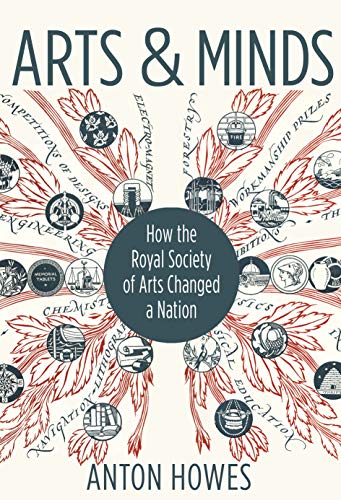
Yes, I learn from a tweet by Anton Howes, a young academic whom I greatly admire, that his first book, entitled Arts & Minds: How The Royal Society of Arts Changed a Nation will be out on May 12th. It is already available on Kindle.
I will start reading this book with the prejudice in my head that the Industrial Revolution was not only “industrial”; it also resembled what we more usually mean by a “revolution”, in the sense that it was also an ideological event. People didn’t just do this, for their own private and selfish reasons. They believed in doing it. They told each other, and anyone else who would listen, that what they were doing would do good, on a huge scale. But unlike with almost all other “revolutions”, the ideologists of the Industrial Revolution were completely and triumphantly right. This triumphant rightness has been such an elephantine presence in the room of history, and is so very counter-intuitive (“Ideologists are all nutters!”), that the ideological nature of this revolution has now become nearly invisible. The concluding paragraph of the Amazon blurb …:
… together with the title of the book, arts and minds, suggest to me that the above prejudices will be confirmed and strengthened. April 15th, 2020 | 3 comments - (Comments are closed)
Those are some of the words to the 1923 hit song “Yes, We Have No Bananas” by Frank Silver and Irving Cohn. The song is mostly associated with World War II, but according to Wikipedia it had found its way into the history books before that:
For nine decades “the depression” meant the one that started in 1929. But the coronavirus looks likely to bring in its wake an economic depression that may well take the definite article for itself. Naomi O’Leary of the Irish Times reports,
I do not seek to play down their achievement in reaching a compromise at all. Every finance minister on Earth must be passing sleepless nights wondering how best to deal with our current predicament. But the dilemma faced by the Eurozone countries is particularly acute. Italy and Spain will never forgive the EU if they receive no help in their hour of need. But the northern countries were repeatedly assured that EU membership and the adoption of the Euro would never mean they had to write a blank cheque to what they see as the spendthrifts to the south (and a few other directions besides). The Dutch, the Germans, the Finns and the Austrians must hope that when they say, “yes, we have no Eurobonds” the upbeat momentum of the first three words will carry them over the next two. April 9th, 2020 | 11 comments - (Comments are closed)
The ‘conservative’ Spanish newspaper/site abc.es. has a report about the food situation in Italy (in Spanish) which indicates the following, something our media seems to ignore, per my translation:
There’s a 10% uplift there, as the report gives a breakdown with more details.
There is much discussion of raids on pharmacies and supermarkets, with police guarding them. This might be Southern politicians screaming for ‘pork’. Or perhaps the economy collapses when the State imposes lockdowns. The Italian State has responded (to the problem it created)
Or is this about something else? This paragraph caught my eye:
And how long here before our food supply chains might disintegrate, when people have to laboriously shop 2 meters apart, queueing to get in, queueing to pay, as the capacity of the shops to serve customers is throttled, whether or not the products are limited or in short supply. Is there any modelling of how long this can go on, never mind if it should at all? March 30th, 2020 | 28 comments - (Comments are closed)
Just now, a lot of people have a lot of time on their hands, and might therefore be open to the idea of watching and listening to a talking head for the best part of an hour. Accordingly, I now recommend this video interview, which I myself have just watched for the first time. Steve Edginton of the Sun newspaper asks a few short questions. Melanie Phillips supplies some much longer answers. At the end of the interview, Phillips mentions a couple of relevant books she has written. These are her novel, The Legacy, and her memoir about how she used to work for the Guardian, Guardian Angel: My Journey from Leftism to Sanity. A lot of us also now have more time for books. For actually reading them, I mean. Melanie Phillips did this interview a few days ago. I wrote this Samizdata posting about Labour antisemitism in May 2018. I deduced what I did from the distant din of battles which I was not personally part of. Phillips tells the same story from direct personal experience, along with several other closely related stories. Like I say: highly recommended. March 29th, 2020 | 12 comments - (Comments are closed)
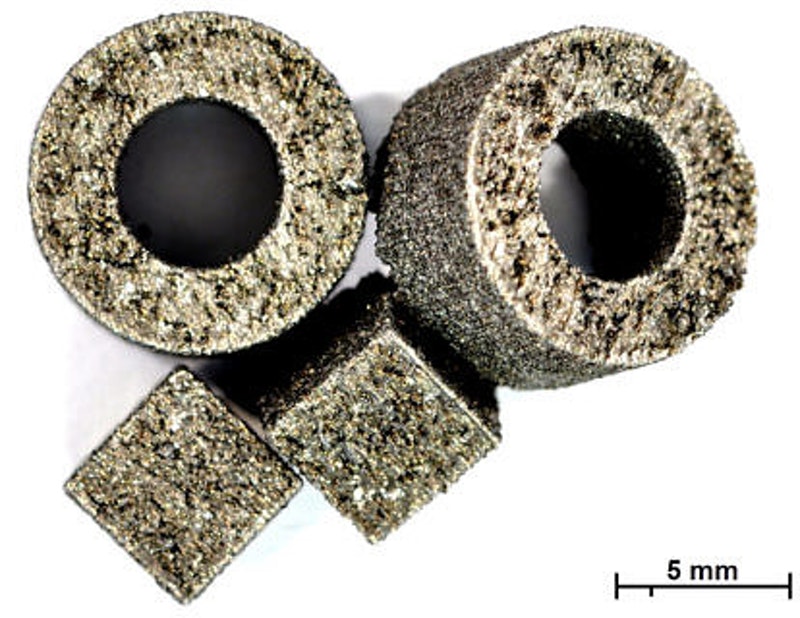
Beneath and beyond all the fretting we’re all now doing about The Virus, the onward march of technology continues. I get emails from Google about advances in 3D printing, and each email contains lots of links, far more links than in any other Google emails I get on other subjects. Links like this one, to a report about some newly contrived magnets:
Note the bit at the bottom on the right, where you learn the size of these things. They are very small. Why are miniature magnets like this so important? And why do they have to be 3D printed? That’s what ignorami like me want to know. The anonymous writer of the report accordingly begins it thus:
A bit later he says:
I had to look up sintering. Blog and learn. → Continue reading: Thoughts provoked by some 3D printed miniature magnets March 13th, 2020 | 23 comments - (Comments are closed)
The 1619 project wasn’t about being right. It wasn’t even about history. It was about pushing an anti-American narrative. It’s best understood as a psywar operation aimed at demoralizing the enemy, in this case the American people. One of my favourite places to find SQotDs is in the little summaries of issues that Glenn Reynolds often adds to the links he supplies. March 10th, 2020 | 12 comments - (Comments are closed)
Just to give a light tap to a small drum, which nobody else will tap if neither of us does, and just to say: fellow Samizdatista Patrick Crozier and I recently did one of our recorded-and-internetted conversations, this time about that strange event called in these parts: The Falklands War, which happened in early 1982. Listen to this by going here. Further thoughts about this historical event and this conversation from me here. (See also an earlier posting I did, about a very strange British public personality who emerged onto British TV during that war.) Somewhat inconveniently, for many, our conversation does rather go on a bit, for over an hour. But I have recently been finding myself spending what used to be my television time instead listening to things not unlike these conversations that Patrick and I have taken to doing – podcasts, YouTubery and so forth (many of these things involving Dave Rubin (a recent discovery of mine)). So I thought it worth mentioning our effort(s) here. February 27th, 2020 | 4 comments - (Comments are closed)
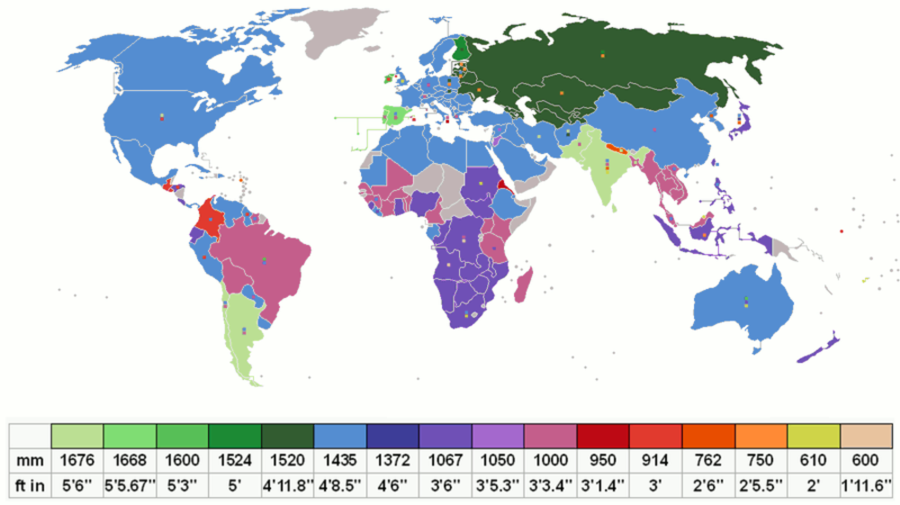
Some MapPorn:
This is a map of the world’s different railway gauges. Fun fact, if fact it be. In the schmoozing after a talk I attended earlier in the week, someone told me that Britain’s four foot eight-and-a-half inch gauge is the result of how far apart horse-drawn carriages had their wheels, in the pre-railways north-east of England, that being where the railways in Britain got started. The point being that such carriages also had a standard gauge. Their wheels dug ruts in the un-tarred roads of those times, so if your carriage had a different “gauge”, it couldn’t travel in those ruts, and thus couldn’t travel at all. These ruts were rails before rails. And that regular distance apart transferred itself to the newly emerging railways. I haven’t checked this. I didn’t want to bother with any facts that might destroy my story, until I’d told my story. But as of now: feel free to destroy away. Another question: Will the railway gauges of the world ever change? By which I mean get somewhat less numerous. Say: As a result of some sort of new intercontinental high speed rail system being developed. I seem to recall reading that in Spain, the new high speed trains are the same gauge as those in France (and thus also Britain) and different from the regular Spanish gauge. Or would a some futuristic global high speed system will just add yet another standard? (Will Brunel’s preferred seven foot gauge for the old Great Western line rise from the dead and conquer the world? Guess: No.) Cue the commentariat who will, I predict, change the subject to the QWERTY keyboard, and then disagree about how that happened, and about how keyboards will be in two hundred years time. February 27th, 2020 | 18 comments - (Comments are closed)
Of this:
Oh, it goes far beyond that, for me and surely for many others. My whole life was made possible by this sort of stuff. With thanks to Instapundit. It’s little postings like this that keep me going back there. If all there was there was politics, I’d keep going back, but surely not so often. Imagine having to copy out just the two links above, letter by letter, number by number. Absurd. A BIT LATER: I put together all of the above for my personal blog, but then I thought: this should go to Samizdata. So I copied and pasted it across. Took me about two minutes. February 21st, 2020 | 9 comments - (Comments are closed)
|
   |
||||

All content on this website (including text, photographs, audio files, and any other original works), unless otherwise noted, is licensed under a Creative Commons License. |
|||||
Recent Comments